
Cooking with Convenience Products
Do you like convenience in your lifestyle and meal planning? Here are ideas categorized by the food groups in MyPyramid. Come on! Let's take a trip through the aisles of the Winning Weight Connections™ Grocery Store.
Bread, Cereal, Rice, and Pasta
-
Select as many whole grain breads and cereals as you can. Fiber fills you up. Aim for breads with 2 grams of fiber per slice and select a cereal with 5 grams of fiber per serving. Label read when purchasing cereals. Often granola-type cereals contain added oil and can be higher in calories. Look for the following words listed first in the ingredient list: whole wheat, brown rice, bulgur (cracked wheat), graham flour, whole grain corn, oatmeal, popcorn, pearl barley, whole oats, or whole rye.
-
Cereal can be a good snack. Select a variety with bite size pieces, place in a plastic bag, and take with you to work as a midmorning or late afternoon snack.
- Try different pastas and grains. As with breads and cereals, look for as many whole grain products as possible. Whole grains have a rich, full taste of whole grains. Look for flavored rice such as pecan rice or Texmati rice - they both have a nutty flavor. Texmati rice smells like popcorn popping as it cooks. Couscous is a grain that has a very different texture and taste, and cooks in 5 minutes! Look for whole wheat couscous. Select a new grain to try each week.
-
For quick and easy pizza, try using roll-out pizza dough found in the dairy case. Select a brand with the lowest fat content. Spread with pizza sauce and top with reduced-fat mozzarella cheese. Don’t forget to add vegetables – shredded carrot, broccoli florets, chopped tomatoes, and red or green peppers. Oh, and don’t forget onion slices.
-
Low-fat tortilla shells can also be substituted for pizza dough. They can also be topped with melted cheese, chicken or tuna salad, and rolled for a quick meal.
-
Cook a large quantity of pasta and rice ahead of time. Store in plastic bags in the refrigerator. Run the pasta under warm water to separate the pasta before serving. Microwave the rice in a microwave safe container. Both the pasta and rice will keep up to a week in the refrigerator and one month in the freezer. Toss with a can of flavored stewed tomatoes and steamed vegetables. Top with a teaspoon of Parmesan cheese and you have a quick and easy meal.
Fruits and Vegetables
Fresh and Dried
- Bagged salads are an easy way to add vegetables to your diet. There is a wide assortment available - spinach, baby greens, Italian, European...and the list goes on.
- Bagged pre-cut veggies like carrot chips, broccoli, and cauliflower are convenient for snacks as well as for meals. Depending on your preference, you can eat raw or cooked. If you don't have to slice or dice to prepare, chances are you will include them in your diet.
- Other convenient forms of veggies include sliced mushrooms, slaw mix, and some larger stores contain red skinned potato slices, celery sticks, stew vegetables, and other convenient forms. You may pay more for these, but if you throw out fresh vegetables each week, you will save money in the long run.
- Baking potatoes and sweet potatoes (often termed Yams) can be microwaved or baked for a snack or complete meal. Top Yams with 1 teaspoon margarine combined with 1-2 tablespoons brown sugar and 1/4 teaspoon cinnamon. Top potatoes with cheese, cottage cheese, vegetables, or leftover chili.
- Fresh fruit can be purchased in a ready-to-use form - cantaloupe, pineapple chunks, and sliced strawberries. Easier to use fruits include berries, bananas, and oranges.
- Dried fruit - raisins, cherries, and cranberries are a high fiber and iron addition to cereal, yogurt, and muffin recipes.
Fruits and Vegetables
Canned
- If you don't like fresh fruits and vegetables, purchase your favorite fruit in a can, packed in water or juice.
- Besides those that are you favorites, be sure to have tomato sauce, tomato juice, and stewed tomatoes on hands as toppers for pasta, rice, and soup. Tomato juice can be used in place of broth in vegetable soups and stews.
- If you are limiting the amount of sodium in your diet, look for low-sodium or no-salt added tomato products and vegetables.
- If you like crunch in your diet, add canned water chestnuts to salads and stir-frys.
- Apple and orange juice aren't just for breakfast anymore. Cook your rice
or couscous in juice in place of water. Look for recipes in the section.
- Applesauce is a good snack and is now available in individual serving sizes/containers as well as other diced fruit.
Fruits and Vegetables
Frozen
-
If you find you throw away fresh vegetables each week, then purchase frozen. Frozen fruits are a good option to fresh in the winter months when good quality produce is not in season. Frozen fruits can be blended into yogurt or used as a topping for low-fat pudding.
-
Frozen mashed potatoes and hash browns are a convenient meal addition. Hash browns can be added to scrambled eggs. Sauté pre-sliced vegetables such as mushrooms, broccoli florets, onion, etc. in a large skillet with 1 teaspoon canola oil. Add 1 cup frozen or packaged cold hash browns to the vegetables. Push to one side of the skillet. Add 3 eggs and scramble. Stir into potatoes and vegetables for a hearty breakfast.
-
Check out the frozen foods section of your grocery store for all types of frozen vegetables. Special varieties of vegetables include stir fry blends that require the addition of meat and rice for a complete meal. Others include meat, rice, and sauce. Be sure to label read for the lower-fat versions.
-
Pay special attention to vegetables that are packaged with pasta and sauces. These products range in total fat and saturated fat content, depending on the sauce ingredients. If the products include meat and rice, the calorie and fat content will be higher, but remember this is a complete meal.
Milk, Yogurt and Cheese
- Save calories and fat by using skim milk. If you use whole milk, make the switch to skim milk gradually. Try 2%, then 1% and end with skim milk.
- Use sour cream on baked potatoes in place of margarine or butter. Regular sour cream contains about 30 calories per tablespoon and margarine contains about 90 calories. Reduced-fat and fat-free sour creams are excellent substitutes for regular sour cream.
- Fruit flavored low-fat yogurts can be spooned over your favorite fresh, frozen, or canned fruit packed in water or juice. Add breakfast cereal to your favorite carton of yogurt to add extra protein. Yogurt can be included in your diet at breakfast, lunch, or as a snack. Dannon makes a wonderful individual packet of yogurt that is accompanied by a side of fruit. Lite versions of yogurt are typically made with a sugar substitute.
- Fat-free cottage cheese and diced fruit makes a good snack. Individual packages of cottage cheese and fruit can be combined for a snack or as an addition to any meal.
- Margarine and butter have the same amount of calories per equal amount, but margarine doesn't contain cholesterol and butter does. You can substitute a diet or lite version of margarine for the regular, but usually these have water, air, or gelatin added so you get less margarine per tablespoon. Often they don't melt well and are not intended for baking, but can be used on potatoes or vegetables. Check the expiration date on these products. Some of them are made with milk solids and only have a 30-day shelf life. Purchase margarine in the squeeze or tub form. The softer the margarine, the easier it is to spread, and you will have a tendency to use less. When selecting margarine, choose a margarine that is more liquid. Make sure the first ingredient is liquid oil and contains 2 grams or less of saturated fat.
-
If buttery flavor is what you are looking for, try one of the imitation butter sprays in the dairy case. These work nicely on corn-on-the-cob or as a thin coating on vegetables when just a touch of liquid buttery flavor is wanted.
-
Check out the spice section of your local grocery store and look for imitation butter sprinkles. These products won't replace the fat called for in a recipe, just the butter flavor. Three fourths of a teaspoon equals the flavor in 1 tablespoon butter or margarine. They are also available in assorted flavors. If you are trying to cut down on butter, substitute these sprinkles for one half of the amount of margarine you normally would use. Sprinkle this on baked potatoes and vegetables after they are fresh from the microwave and still moist and hot. If you are using them on popcorn, spray first with a butter vegetable oil so the sprinkles will stick. Try cheddar cheese sprinkles on baked potatoes or popcorn.
-
Use non-dairy creamer in place of regular cream in your coffee in the morning.
-
There are a variety of cheeses on the market including lite, reduced-fat, and fat-free. Let your taste buds be your judge. In the past year or so, the taste of the fat-free products have greatly improved. They still don't melt as well as regular cheese. Fat-free Parmesan cheese has one of the better flavors. Use this rule of thumb when selecting cheese: the more intense the flavor, the less cheese you need to use. Romano is stronger than Parmesan. If you choose to use regular cheese, mozzarella cheese contains the least amount of fat per ounce, followed closely by feta. Feta is another one of those strong flavored cheeses, so you can pack in flavor with a small amount. Look for cheese that contains 6 grams of fat or less per ounce. By the way, an ounce of cheese is about the size of a computer floppy disc.
-
Neufchatel cheese is a good substitute for regular cream cheese. The product has the same taste and texture as regular cream cheese. Neufchatel cheese also does well in baking.
-
Lite ricotta cheese is a good baked potato topper. It can also be substituted for the regular version in Italian dishes.
Meat, Poultry, Fish, Dry
Beans, Eggs and Nuts
Meat, Poultry, and Fish
- Purchase non-fat ham, turkey, or chicken slices from the deli for sandwiches. Put as many vegetables as you can on your sandwiches - lettuce, tomato, cucumber, onion, red pepper slices, hot peppers, or sweet sandwich stackers (sliced pickles). Just remember that deli meats can be high in fat, saturated fat, and sodium if you don't purchase reduced fat and sodium versions.
- Check out frozen grilled fish fillets and low-fat breaded fish sticks. Boxed fish with toppings can be found that contain less than 6 grams of fat per serving.
- You don't need to eliminate red meats totally from your diet, but limit the amount because they are higher in total and saturated fats. Substitute turkey, chicken, seafood, and ground turkey breast. Check with the butcher to make sure the turkey hasn't been ground with the skin on.
- When selecting beef, look for the select or choice grade and anything that begins or ends with round for a product with less fat. Prime contains a high amount of fat.
- When selecting pork, look for the word loin in the cut section.
- Look for ground turkey breast versus ground turkey. Ground turkey may have skin and fat ground into the meat, increasing the fat content. Ground turkey breast contains about 1 gram of fat in 4 ounces and ground turkey contains 9 grams of fat in 4 ounces. White meat is lower in fat and calories than dark meat.
- Chicken thighs are extremely high in fat ( 9 grams of fat in 3 ounces). When you purchase ground chicken, it usually is ground thighs. If you like ground chicken, ask your butcher to grind a boneless and skinless chicken breast.
- Canned tuna and salmon packed in spring water are versatile choices to have around. Purchase solid white albacore to add to casseroles and tuna salad. Tuna can also be purchased in a reduced-sodium version. If you purchase regular canned fish, place in a colander and rinse with clean running water to reduce the sodium content by as much as 80%.
- Low-fat sausage can be sliced and added to bean soups, scrambled eggs, and pasta salads for a delicious smoked flavor.
- Bags of boneless, skinless chicken breasts can be purchased in the frozen foods section. Usually they require about 20-30 minutes of cooking time and also come in a variety of flavors -BBQ, Italian, and Teriyaki, to name a few.
Dry Beans
- Beans, lentils, and split peas are a great source of fiber, protein, and iron. They are also low in fat. So add them to soups, salads, rice, and pasta dishes. Purchase dried or canned. Soaking beans is very easy. Place in a large pan, cover with water, and soak overnight. Or use the quick soak method on the back of the bag. Canned garbanzo beans or kidney beans are a wonderful addition to salads.
Eggs
- If you don't use eggs more than 4 times per week, purchase regular old fashioned eggs. If you use more than this, purchase a cholesterol/fat free egg substitute to reduce the cholesterol content of your diet.
Nuts
-
If used in small amounts, nuts are a tasty addition to fruits salads. Nuts contain quite a bit of fat and calories, but the fat is considered unsaturated. Nuts can also replace meat in a meal.
-
Most peanut butters are about 85 to 90 percent fat. Even if the peanut butter claims less salt or sugar, chances are that the fat has not been reduced. If you purchase ‘natural’ peanut butter, you’ll notice the fat at the top of the jar. You can remove this to reduce the fat content. The peanut butter may be harder to spread, so microwave the peanut butter for about 10 to 15 seconds to soften. Reduced-fat peanut butter can be purchased, but it is still considerably high in fat. Be sure to measure the serving size and don’t go over 1 to 2 tablespoons per sandwich. Spread it on thin!
FATS, OILS, AND SWEETS
Fats and Oils
-
Fats come in several varieties: saturated, monounsaturated, and polyunsaturated. Saturated fats generally are generally solid at room temperature and are from animal sources, such as butter, beef and poultry fat, lard, and cocoa butter. Saturated oils include palm oil, palm kernel oil, or coconut oil. Cream is also a saturated fat. Saturated fats raise blood cholesterol levels. Limit saturated fats in your diet.
-
Use the majority of your oils from monounsaturated and polyunsaturated sources. Monounsaturated oils can lower blood cholesterol levels, if they replace the saturated fats in your diet. Monounsaturated oils include olive oil, canola oil, and peanut oil (which has a high smoke point and is good for stir frying). Often you can find flavored oils that pack in more flavor with just one tablespoon.
-
Polyunsaturated oils include safflower, sunflower, soybean, cottonseed, corn oil, and sesame oil. Sesame oil has a strong flavor, but is not good for sauteeing or stir frying. It is a flavorful addition to home made salad dressings and sauces.
-
Mayonnaise can be purchased in a variety of forms that include fat-free, lite, reduced-fat and regular. Label read to determine the actual fat in each of these varieties. Regular mayonnaise contains about 100 calories per tablespoon and has 12 grams of fat. Lite mayonnaise can be combined with honey Dijon mustard and dill for a sandwich spread or as a fish topper.
-
Salad dressings, like mayonnaise, also come in a wide range of fat contents. Lite and fat-free dressings are excellent potato and vegetable toppers, as well as flavor additions to pasta salads.
Sweets and Pop
-
Chocolates are generally high in fat and calories (who didn't know that!) Beware of health food candies such as yogurt raisins and carob. These may still be high in fat and calories. Often they are higher than regular products because sugar and fat are added as flavor enhancers. Hard candies such as Jolly Ranchers and licorice are usually fat-free and lower in calories than products containing caramel or chocolate.
-
Watch out for candies with sugar alcohols - sorbitol, mannitol, xylitol - in large amounts these can cause diarrhea. They also have the same amount of calories as foods with sugar. The sugar alcohols are absorbed more slowly, but you eventually end up with the same number of calories.
- Limit the amount of pop you drink. Substitute water. Do this gradually, and carry the water with you in a bottle.
ADDITIONAL TOPICS TO HELP YOU:
You will find the following nutrition tools helpful. Cooking With MyPyramid is a family cookbook with helpful tips, nutritious and
You will find the following nutrition tools helpful. Cooking With MyPyramid is a family cookbook with helpful tips, nutritious and delicious recipes, and contains many challenges to motivate you to prepare recipes and make changes. The book comes with a
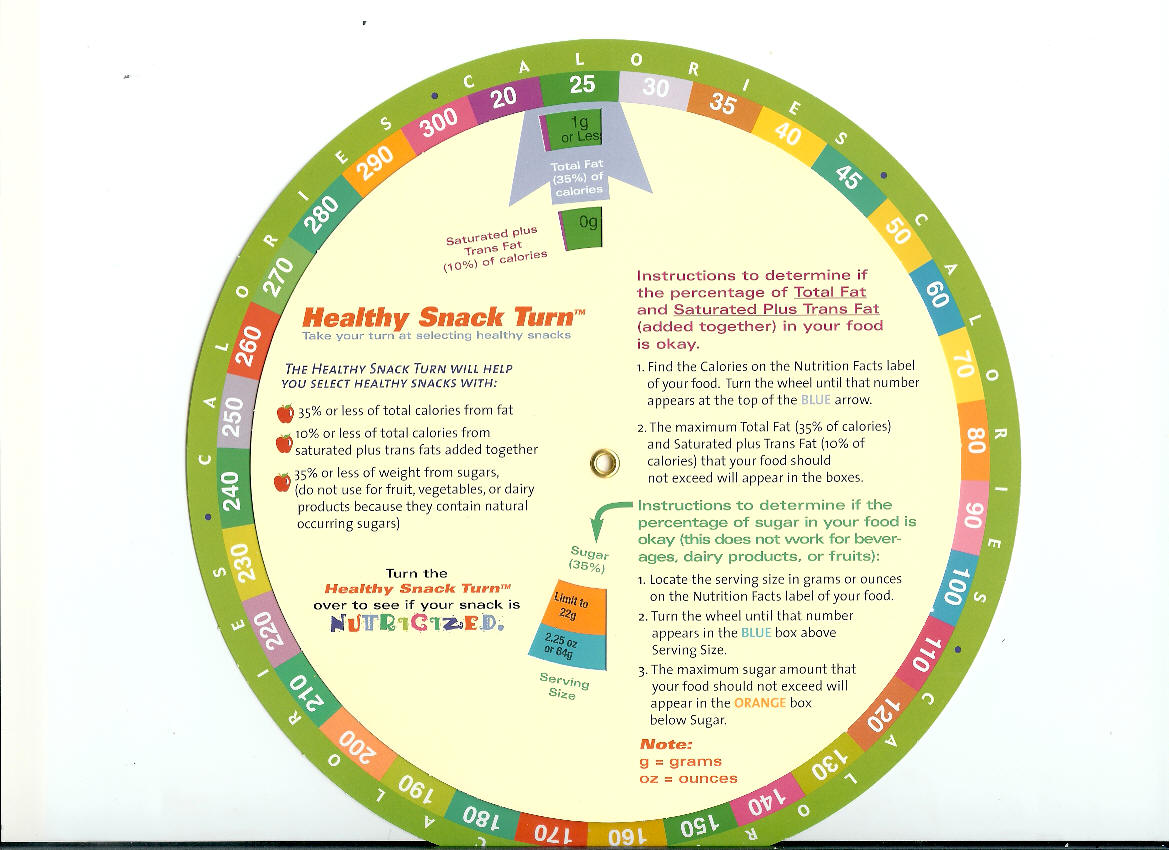
Healthy Snack Turn™ to help you select nutritious foods at the grocery store and a Your Pyramid Connections Slide Guide™ to help you determine your recommended daily food groups and amounts based on your age, activity, and gender. Each can be ordered separately or as a set. The cookbook comes with the tools and is $14.95. Individually the tools are $3.50 each.Click on each picture to find out more.

Contact Site Map Privacy Policy
Copyright © 2000 - 2010 by YourNutritionConnections™ LLC
All rights reserved. No part of this
publication may be reproduced, stored in a retrieval system, or transmitted in
any form or by any means – electronic, mechanical, photocopying, recording, or
otherwise, without the prior written permission of the copyright owner. The
contents of the NutritionConnections.com site is for informational purposes
only. The content is not intended to be a substitute for a consult with your
physician or dietitian. Get the advice of your physician or other qualified
health professional to answer questions you might have regarding a nutritional
or medical condition. Before beginning an exercise program, check with your
physician.